THE INTERNET HAS A LANDLORD PROBLEM.
Domains that cost ordinary registration fees can be held unused and later offered back to productive users for thousands, tens of thousands, or more. We want to document what that market does, who benefits, and what it costs everyone else.
Register. Park. Wait. Resell.
The central question here is not whether domain investing can produce revenue. It obviously can. The question is whether controlling scarce identifiers without productive use creates value, extracts value, or some mixture of both.
Domain → Website → Product → Customers → Revenue
The name becomes infrastructure for an operating activity.
Domain → Parking page → Waiting → Resale
The name becomes inventory whose value depends heavily on someone else eventually wanting it.
What exactly was created?
A low acquisition cost can control a commercially useful name.
The resale price can be orders of magnitude higher.
That gap is the part we want to investigate rather than simply assume.
Illustrative figures only. The research database will use sourced, date-stamped observations.
Why this calculator exists: GDubs.com
In September 2026, I tried to buy GDubs.com for my own productive use. HugeDomains listed it for $12,395. I offered $400. The seller declined to consider offers and held to the full asking price.
The retail .com price I was paying when I registered this project's domains in September 2026.
Twenty-three annual terms at $13.48. This is a comparison benchmark, not a claim about HugeDomains' actual cost basis.
$89.96 above that benchmark, or about 29% more.
About 40× the 23-year benchmark and roughly 31× my offer.
Run the numbers yourself
The GDubs.com benchmark is loaded by default. Change any number to test a different scenario.
This simplified calculator is intentionally conservative and transparent. It does not claim to know the seller's acquisition price, historical renewal rates, portfolio losses, taxes, commissions, financing, or other costs.
I offered $400. The answer was $12,395 or nothing.
On September 22, 2026, GoDaddy Enterprise Sales Executive Mia C. submitted my $400 offer for GDubs.com. The next morning, she relayed the seller's response: the seller was “not willing to consider any offers”, and the $12,395 asking price was the best available price.
The broker also told me that, based on prior dealings with this seller, its prices tend to rise over time and recommended buying at the current asking price rather than waiting.
HugeDomains' own listing offered a 24-month payment plan of $516.46 per month, effectively turning a six-character domain name into a two-year monthly obligation.
Mia also told me that, in the domain history she reviewed, she found no period in which GDubs.com had hosted a developed website. That statement was made to me in conversation and is not contained in the written broker response quoted above.
What I can document publicly
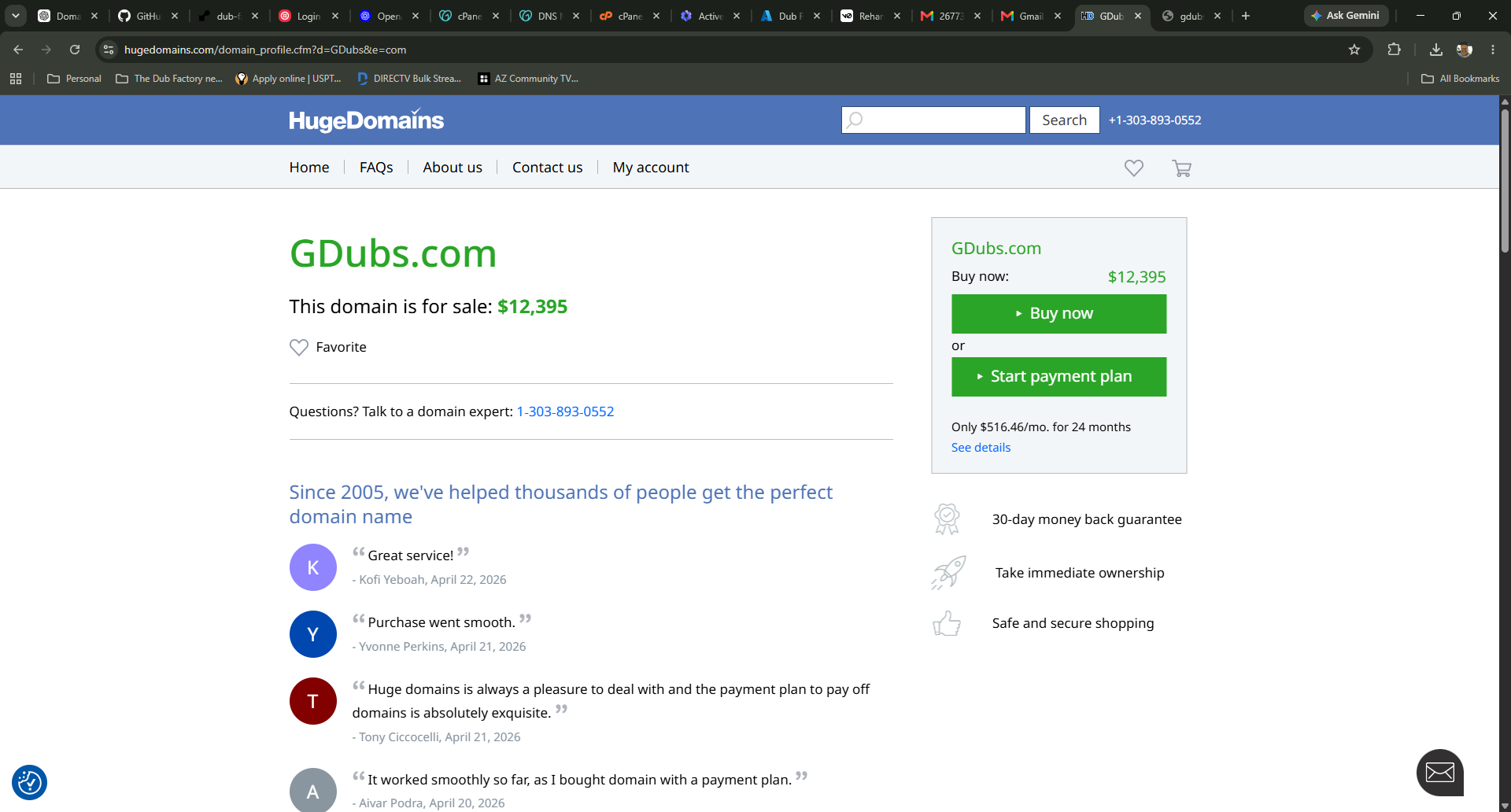
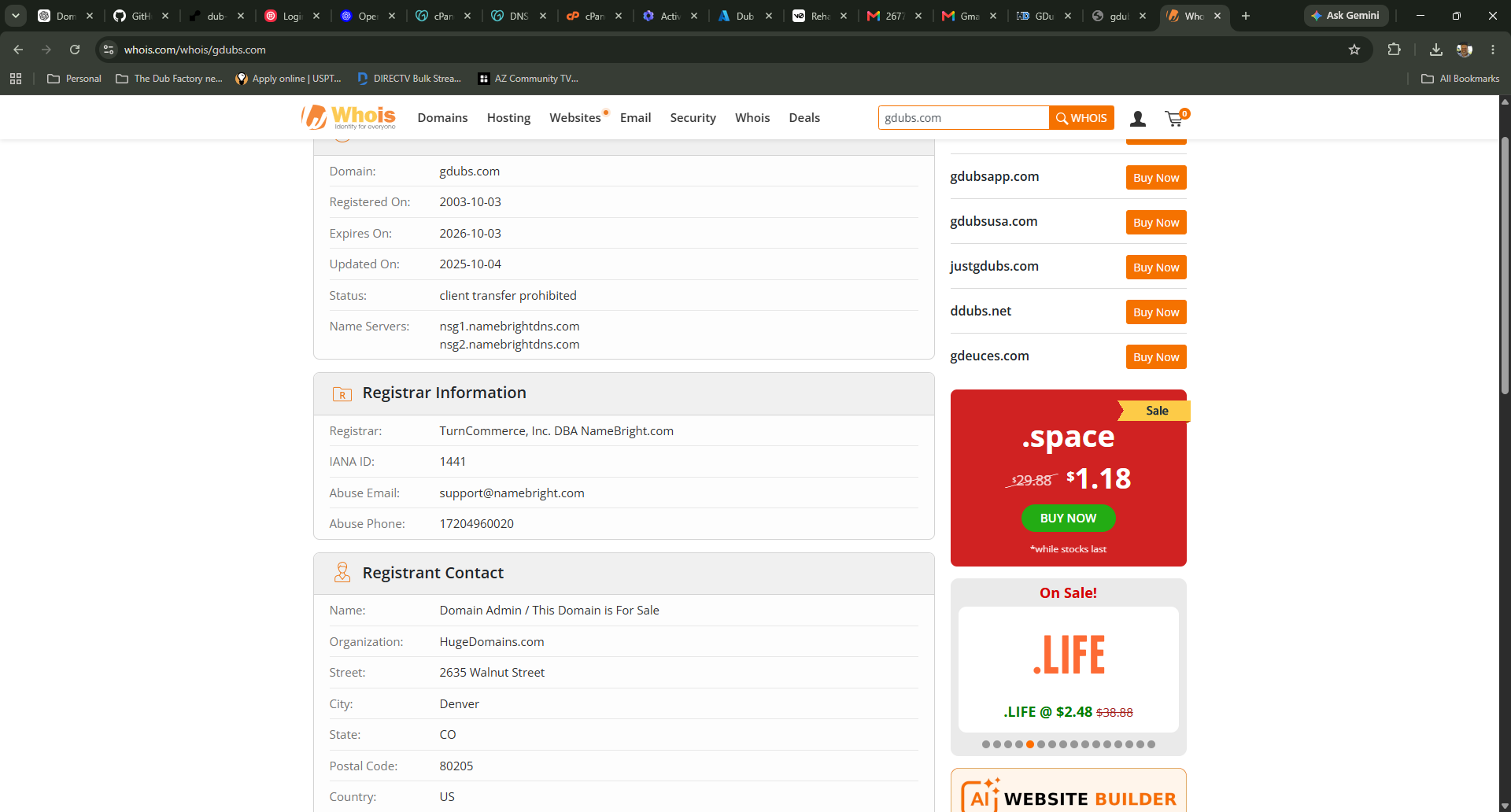
GoDaddy's broker relayed that the seller believed the domain was appropriately priced based on its market and potential end users, would not consider offers, and required the buyer to reach the $12,395 asking price. The same response cautioned that this seller's prices tend to increase over time.
The case for domain investing deserves to be shown too.
Risk
Many acquired domains never sell, while renewal costs continue.
Price discovery
Secondary markets can reveal what buyers are willing to pay for scarce names.
Liquidity & brokering
Brokers can help connect buyers and sellers and handle complex transfers.
Our job is to test those claims against data, not erase them. The project is strongest when a visitor can see both the justification and the criticism.
Think the rules should change?
Use official government channels. Find your representatives, state legislators, consumer-protection offices, or relevant federal agencies and tell them what you think in your own words.